Data Destruction & E-Waste Destruction in Brisbane
Every old hard drive in your storeroom still remembers everything. We wipe or physically shred them, record every serial number, and hand you a numbered certificate that proves the data is gone. Data and e-waste destruction for Brisbane businesses, documented drive by drive.
Deleting Files Doesn't Delete Anything
Emptying the recycle bin, formatting the drive, even a factory reset. None of it actually removes data from a hard drive. It just removes the signposts. The files themselves sit there, recoverable with free software anyone can download, until something properly overwrites or destroys them.
That's why secure data destruction is its own discipline, with its own standards, and why "the intern formatted them" is not a sentence you want to say to an auditor. Client records, payroll, emails, saved passwords, scanned IDs. If your business has ever touched it, some old drive in the building probably still holds it.
We've been destroying data for Brisbane businesses since 2015. Two methods, done properly, documented every time.
Method 1: Data Wiping to the NIST 800-88 Standard
Data wiping (also called data erasure or data sanitisation) overwrites every sector of the drive so the original data can't be recovered by any practical means. It's not a quick format. Our process runs three full passes over the drive and follows NIST 800-88, the guideline that government and enterprise IT departments around the world specify for media sanitisation.
Wiping is the right choice when the equipment still has life in it. A wiped laptop can be refurbished, resold or donated, which keeps working machines in use and is a large part of why our collection service stays free for most businesses. The data is gone. The laptop isn't.
Every wiped drive is verified, and its serial number goes on your certificate.
Method 2: Physical Hard Drive Destruction
Some drives shouldn't be reused. Failed drives that can't be wiped, drives from machines going straight to recycling, or media your security policy says must be physically destroyed. For those, we destroy the drive itself.
Drives are pierced and then fed through our industrial shredder, which tears them into small fragments of mixed metal. There is no recovering data from a drive that no longer exists as a drive. The shredded material then goes into the metal recycling stream, so even destroyed media stays out of landfill.
This covers every kind of storage that crosses our bench: standard SATA and SAS hard drives, SSDs, M.2 and NVMe sticks, USB drives, and backup tapes. Solid state media in particular should be shredded rather than just wiped when it's leaving service, since worn SSD cells can hold data in ways software can't always reach.
Not sure which method your situation calls for? That's a two minute phone conversation. Most clients end up with a mix: wipe the working fleet, shred the dead drives and loose media.
E-Waste Destruction: The Device, Not Just the Drive
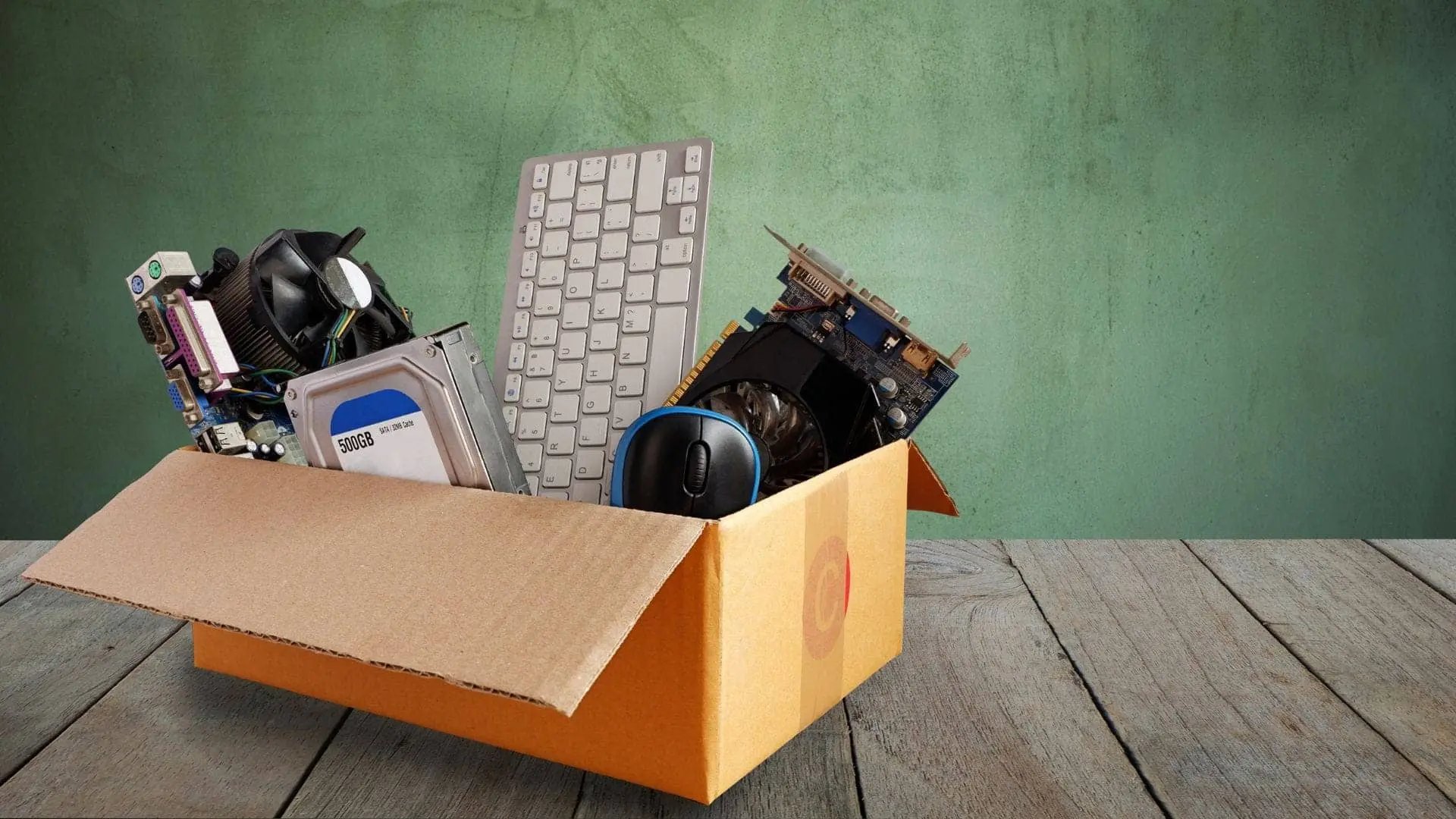
"E-waste destruction" and "data destruction" often get used to mean the same thing. Usually what's wanted is this: take the whole lot away, and make sure nothing on it can come back. That's the standard job, and it's most of what this page describes. Drives are wiped or shredded, the equipment they came out of goes through e-waste recycling, and one numbered certificate covers the data side of it.
Occasionally it's meant literally, and the hardware itself has to be destroyed rather than refurbished and resold. That comes up with asset-tagged equipment a business doesn't want resurfacing on the second-hand market, with gear carrying branding or security markings, and where an internal policy simply says destroyed means destroyed. We'll do it, but it's worth a conversation first: destroying a working machine gives up the recovery value that normally makes collection free, and for most equipment a verified wipe reaches the same security outcome for nothing.
The paperwork doesn't change either way. Serial numbers are recorded at your site, the method is recorded against each device, and it all lands on one certificate.
The Certificate of Data Destruction
Anyone can tell you your drives were destroyed. The certificate is what lets you prove it, to a client, an insurer, an auditor or the OAIC. Ours is issued per job, numbered, and lists:
- The serial number of every drive and device processed
- The destruction method used, wiping to NIST 800-88 or physical shredding
- The collection date, your business details, and the total weight processed
- A unique certificate number for your compliance records
File it and forget it. If a question ever comes up about where those drives went, the answer is one page long and has serial numbers on it.
Chain of Custody, From Your Office to the Shredder
Data security doesn't start at the shredder. It starts at your front door.
Recorded at your site
Our team scans serial numbers with barcode scanners as equipment is packed, before anything leaves your building. You know exactly what we took.
Transported directly
Equipment goes straight from your premises to our Brisbane facility in our own vehicle. No depots, no third parties, no overnight stops.
Destroyed and documented
Every drive is wiped or shredded, checked off against the serial list from your site, and written onto your certificate. The loop closes on paper.
Handling everything ourselves, collection through destruction, means there's never a gap in the chain where your drives sit unaccounted for.
Why This Matters Under Australian Privacy Law
The Privacy Act requires organisations to take reasonable steps to destroy or de-identify personal information they no longer need. The Notifiable Data Breaches scheme adds teeth: lose control of personal information in a way likely to cause serious harm and you may have to notify both the OAIC and every person affected.
Old drives are one of the easiest ways to fail that test. A server sold at auction with the drives still in it, a skip bin full of towers, a "recycler" who shipped containers overseas without touching the data. These are all real ways Australian businesses have lost data without a single hacker involved.
Documented destruction with serial numbers is the reasonable step. It's what we do, on every job, whether you're a two person practice or a corporate floor.
Who Uses Our Data Destruction Service
Law firms clearing matter files off old machines. Medical and allied health practices with patient records under strict retention rules. Accountants, engineers, real estate agencies, schools and government contractors. Anyone whose old drives hold other people's information, which in practice is every business in Brisbane.
Most data destruction jobs ride along with a wider cleanout. Drives get destroyed, and the machines they came out of go through e-waste recycling in the same visit. If you need the full itemised audit trail for a fleet, that's our IT asset disposal service.
Data Destruction Questions
What's the difference between data wiping and data destruction?
Data wiping overwrites every sector of the drive so it can be safely reused. Physical destruction shreds the drive itself. Both make data unrecoverable; the right choice depends on whether the equipment has life left in it.
What standard do you wipe drives to?
Our software wipe runs three full passes following the NIST 800-88 guideline, the standard specified by government and enterprise IT departments for media sanitisation.
Do you provide a certificate of data destruction?
Yes, on every job. Each certificate is numbered and lists the serial number of every drive processed, the destruction method and the date. It's built for audit and compliance files.
Can you destroy loose hard drives without the computers?
Yes. Loose hard drives, SSDs, USB sticks and backup tapes are some of our most common jobs. Give us a rough count and we'll quote.
Do you destroy e-waste as well as the data on it?
Yes, and the usual job is both. Every drive is wiped or shredded, and the equipment it came out of is dismantled and recycled. One numbered certificate covers the data destruction, and nothing we collect goes to landfill.
Can you destroy the whole device instead of just the drive?
Yes, though it's worth a quick conversation first. Destroying a working machine gives up the recovery value that makes collection free for most businesses, and a verified NIST 800-88 wipe reaches the same security outcome. Where an asset tag or an internal policy means the hardware itself has to go, we'll destroy it and record it that way on the certificate.
How much does e-waste destruction cost in Brisbane?
For most business loads within 20km of the Brisbane CBD there's no charge, because the value recovered from the equipment covers the work. Small or low-value loads, and jobs where working hardware must be destroyed rather than refurbished, may attract a fee that we quote before anything is booked.
Ready to Clear Out Your Old IT Equipment?
Get a free, no-obligation quote for your business e-waste collection. We handle everything from pickup to documented disposal.